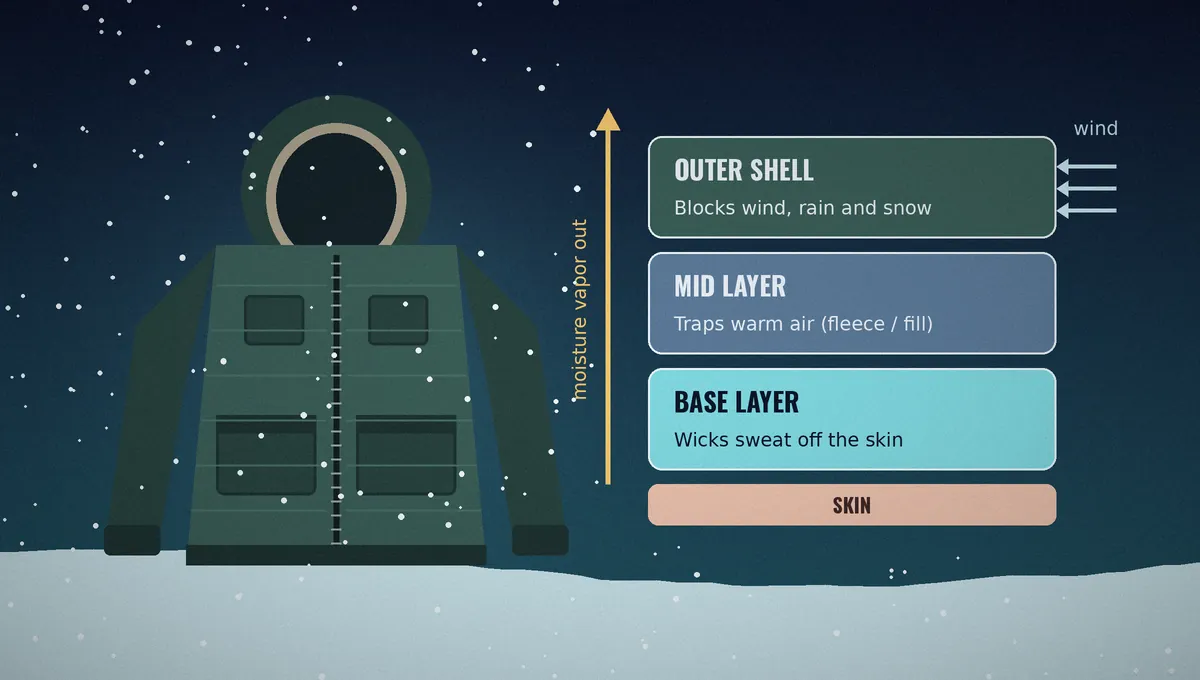
Thermal wear is insulated clothing that keeps the body warm and dry in cold, wet, or windy conditions. In defense and tactical use, it's built to work as a layered system. That lets a person add or remove layers as activity levels and the weather change, so they avoid both getting cold and sweating too much.
How the layering system works
Base layer. Worn against the skin, it pulls sweat away from the body so the skin stays dry. Wet skin loses heat much faster than dry skin.
Mid layer. Traps warm air for insulation. Fleece and synthetic or down fill are common.
Outer layer. A shell that blocks wind, rain, and snow while still letting moisture vapor escape.
The U.S. military's Extended Cold Weather Clothing System (ECWCS) is a well-known example of this layered approach.
Common materials
Merino wool. Warm even when damp, naturally resists odor, and is comfortable against the skin.
Synthetic fabrics (polyester, polypropylene). Dry quickly, wick sweat well, and hold up to hard use.
Fleece. Light, warm insulation that stays warm when wet and dries fast.
Synthetic insulation. Keeps much of its warmth when wet, which matters in damp cold.
Down. Very warm for its weight, but loses much of its warmth when wet unless it's been treated.
Waterproof, breathable membranes. Used in outer shells to keep water out while letting sweat vapor escape.
Flame-resistant fibers. Used in some garments where there's a fire or flash hazard.
Intended use cases
Cold-weather and arctic operations, and extended time outdoors in freezing temperatures.
Tactical missions where people move quickly and then stay still, so their warmth needs keep changing.
Mountain and high-altitude work, and cold, wet coastal environments.
Training exercises, search and rescue, and field work in winter conditions.
Key features to look for
Moisture wicking and breathability, to prevent sweat build-up.
A good warmth-to-weight ratio, and packing down small.
Durability and abrasion resistance for rugged use.
Quiet fabrics and suitable colors or camouflage patterns for tactical settings.
Freedom of movement, with fits that work under gear and body armor.
Vents, adjustable cuffs, and hoods, so warmth can be adjusted on the go.
Low heat signature. Some garments are designed to reduce how visible the wearer is to thermal imaging.
Safety note. Proper cold-weather clothing lowers the risk of hypothermia and frostbite, but it doesn't remove that risk. Follow your unit's or organization's cold-weather guidance, keep layers dry, and watch for early signs of cold injury, such as numbness, shivering, or confusion.
General product information only. It isn't an offer to sell, and it isn't a statement of any contract, specification, or certification. Always follow the manufacturer's instructions and the applicable military or agency specifications.